Introduction
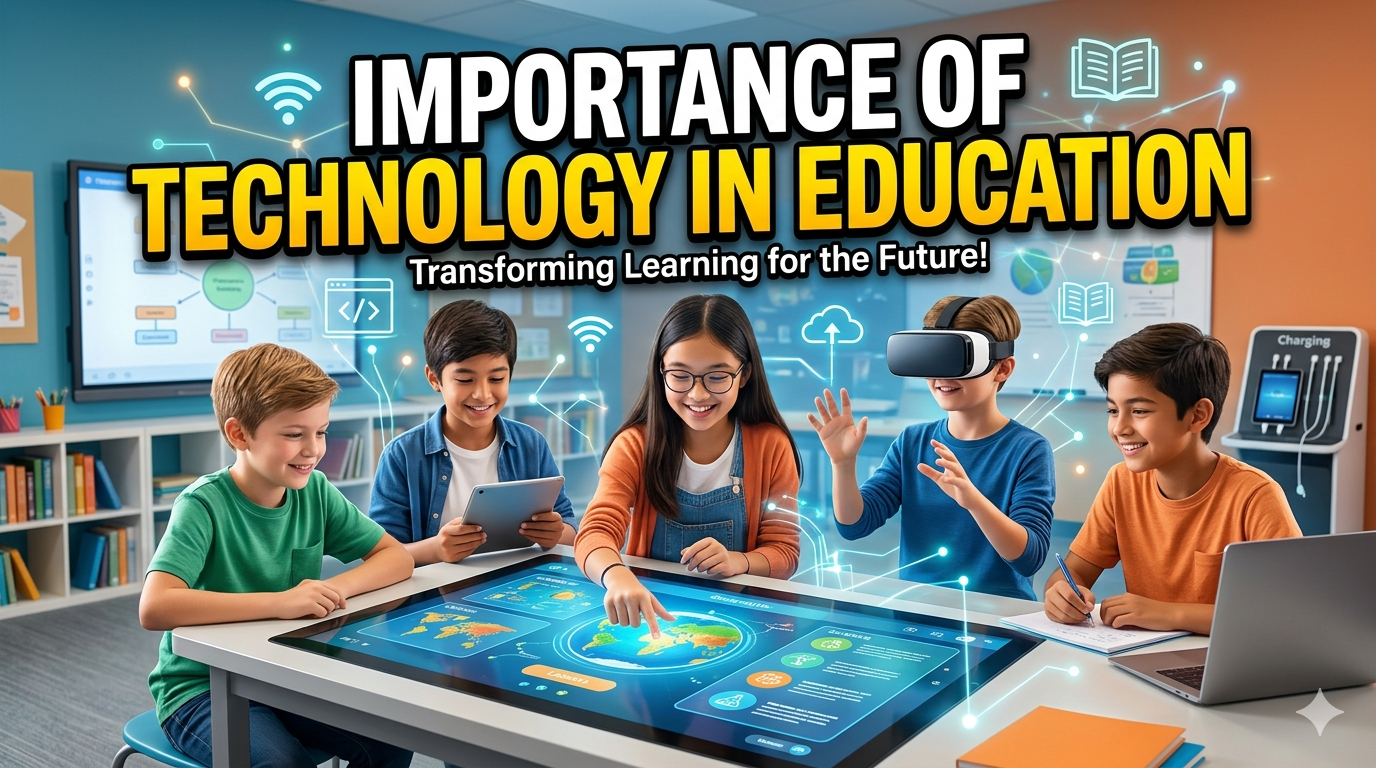
Technology has become an important part of modern education. Today, students and teachers use technology every day for learning, teaching, communication, and research. From online classes to digital study materials, technology has completely changed the education system.
Technology makes learning easier, faster, and more interesting for students. It also helps teachers explain topics in a better and more interactive way.
What is Technology in Education?
Technology in education means using digital tools, computers, mobile phones, the internet, and software to improve learning and teaching.
Examples of educational technology:
- Online classes
- Smart classrooms
- Educational apps
- Video lectures
- Digital books
- Online tests and assignments
Technology helps students learn anytime and anywhere.
Importance of Technology in Education
Technology plays a major role in improving the quality of education and learning experiences.

1. Easy Access to Information
Students can easily search for information online using the internet. Educational websites, videos, and e-books provide quick access to knowledge.
Benefits:
- Fast learning
- Easy research
- Access to global knowledge
- Saves time
2. Online Learning Opportunities
Technology allows students to attend online classes from home. This became very popular during the pandemic.
Benefits:
- Learn from anywhere
- Flexible learning schedule
- Access to online courses
- Helpful for distance education
3. Interactive Learning
Smart boards, animations, videos, and presentations make learning more interesting and enjoyable.
Benefits:
- Better understanding
- Increased student engagement
- Improves concentration
- Makes difficult subjects easier
4. Better Communication
Technology improves communication between teachers, students, and parents through emails, messaging apps, and online platforms.
Benefits:
- Fast communication
- Easy sharing of notes and assignments
- Quick updates and announcements
- Better student support
5. Skill Development
Technology helps students learn important digital skills needed for future careers.
Benefits:
- Computer knowledge
- Internet skills
- Problem-solving ability
- Creativity and innovation
6. Saves Time and Effort
Digital tools help teachers prepare lessons, check assignments, and manage student records more efficiently.
Benefits:
- Faster work
- Easy management
- Improved productivity
- Organized learning system
Advantages of Technology in Education
Technology provides many advantages for both students and teachers.
Advantages:
- Makes learning simple and fun
- Improves educational quality
- Provides global learning opportunities
- Encourages self-learning
- Supports modern teaching methods
Disadvantages of Technology in Education
Although technology has many benefits, excessive use can also create some problems.
Disadvantages:
- Distraction from studies
- Internet addiction
- Less physical activity
- Technical issues
- High dependence on devices
Future of Technology in Education
The future of education will become more digital and advanced. Artificial Intelligence (AI), virtual reality, and smart learning systems are improving modern education.
Future Trends:
- AI-based learning
- Virtual classrooms
- Smart education apps
- Personalized learning experiences
- More online education platforms
Conclusion
Technology has transformed the education system in many positive ways. It makes learning easier, faster, and more interactive for students and teachers. While there are some disadvantages, the benefits of technology in education are much greater. Proper use of technology can help students gain knowledge, improve skills, and prepare for a successful future.
THANK YOU



Leave a Reply