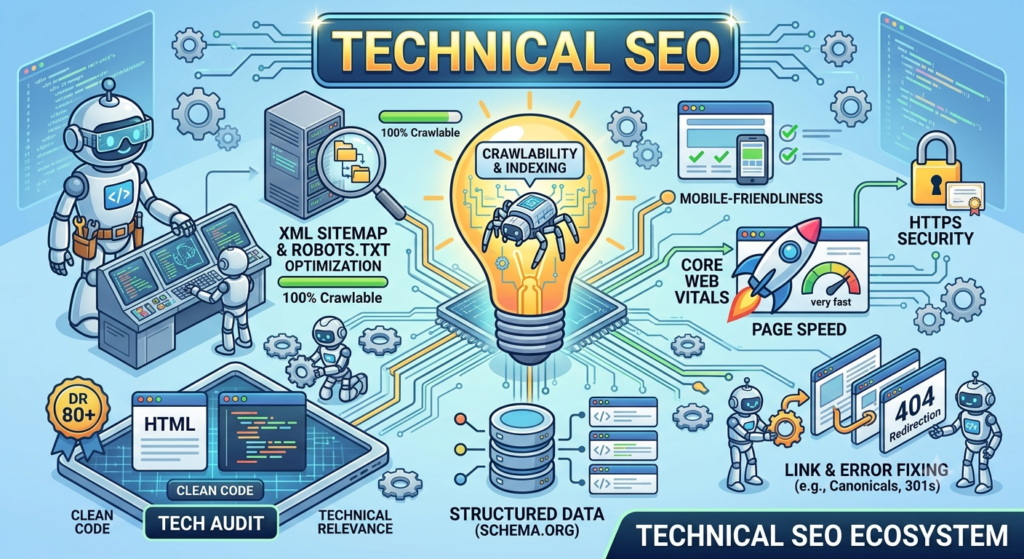
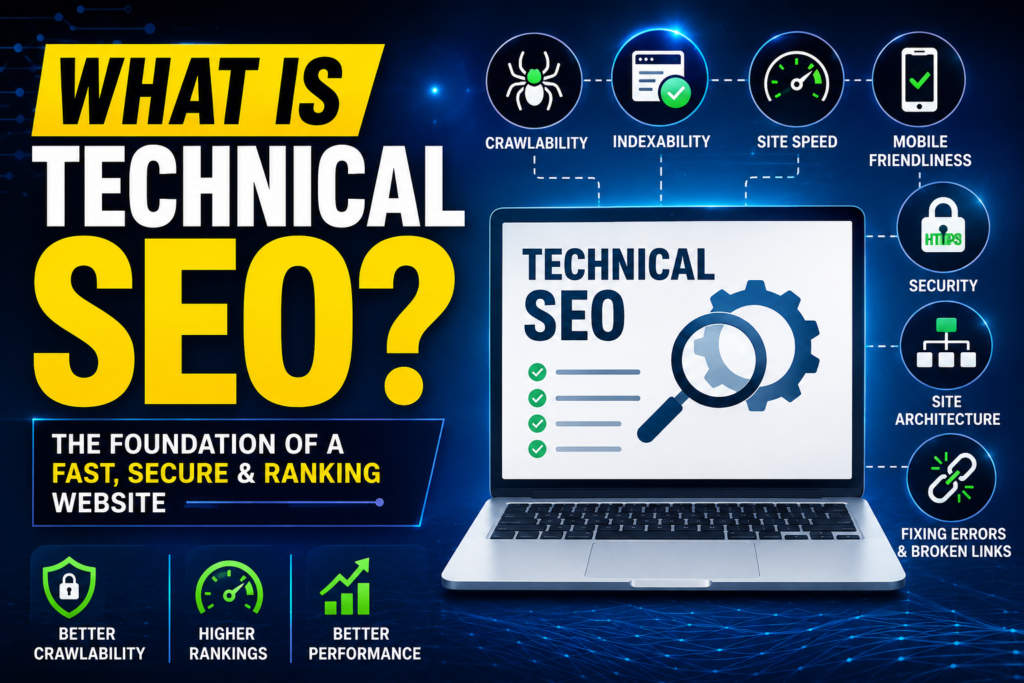
Technical SEO is the practice of optimizing a website’s technical elements to help search engines crawl, index, and rank it while providing a fast and secure user experience.
Top 10 Technical SEO Factors
1. Website Crawlability
Ensure search engine bots can easily crawl all important pages of your website.
Best Practice:
- Create a clear site structure.
- Use a
robots.txtfile correctly. - Avoid blocking important pages.
2. Website Indexability
Make sure important pages can be indexed by search engines.
Best Practice:
- Remove unnecessary
noindextags. - Submit an XML sitemap.
- Fix duplicate content issues.
3. Website Speed
A fast-loading website improves user experience and search rankings.
Best Practice:
- Compress images.
- Minify CSS, JavaScript, and HTML.
- Enable browser caching.
4. Mobile-Friendliness
Your website should work smoothly on all mobile devices.
Best Practice:
- Use responsive design.
- Ensure text is readable.
- Make buttons easy to tap.
5. HTTPS Security
Protect your website with an SSL certificate to use HTTPS.
Benefits:
- Secures user data.
- Builds trust.
- Is a Google ranking factor.
6. XML Sitemap
An XML sitemap helps search engines discover and understand your website’s pages.
Best Practice:
- Include all important pages.
- Update it regularly.
- Submit it in Google Search Console.
7. Fix Broken Links & Errors
Broken links and 404 errors create a poor user experience and can affect SEO.
Best Practice:
- Regularly check for broken links.
- Fix or redirect broken pages.
- Monitor crawl errors.
8. Canonical Tags
Canonical tags tell search engines which version of a page is the original, helping prevent duplicate content issues.
Best Practice:
- Add canonical tags to duplicate or similar pages.
- Use one preferred URL for each page.
9. Structured Data (Schema Markup)
Schema markup helps search engines understand your content and can improve how your pages appear in search results.
Benefits:
- Rich snippets.
- Better visibility.
- Higher click-through rate (CTR).
10. Core Web Vitals
Core Web Vitals measure your website’s user experience.
They focus on:
- LCP (Largest Contentful Paint): Loading speed.
- INP (Interaction to Next Paint): Responsiveness.
- CLS (Cumulative Layout Shift): Visual stability.
Improving these metrics can enhance both user experience and SEO.