On-Page SEO is the process of optimizing the content and technical elements on a webpage to improve its search engine ranking and user experience.
Top 10 On-Page SEO Factors
1. Keyword Research
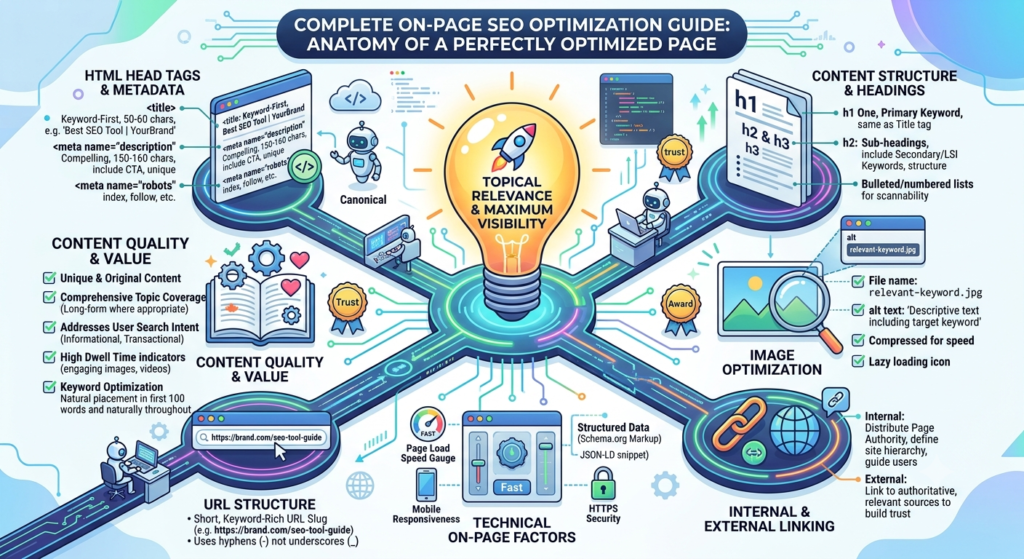
Find the right keywords that users search for and use them naturally in your content.
Example: “On-Page SEO”, “Digital Marketing”, “SEO Tips”
2. Title Tag Optimization
Create a unique, attractive title that includes your main keyword.
Best Practice:
- Keep it 50–60 characters.
- Place the primary keyword near the beginning.
3. Meta Description
Write a short and engaging description that summarizes your page and encourages users to click.
Best Practice:
- 150–160 characters.
- Include the target keyword naturally.
4. High-Quality Content
Create original, informative, and valuable content that answers users’ questions better than competitors.
Remember: Content is the king of SEO.
5. Heading Tags (H1, H2, H3)
Use headings to organize your content and improve readability.
- H1: Main title
- H2: Main sections
- H3: Subsections
6. URL Optimization
Use short, clean, and keyword-rich URLs.
Good Example:example.com/on-page-seo-guide
7. Image Optimization
Optimize images by:
- Compressing file size
- Using descriptive file names
- Adding relevant Alt Text
This improves page speed and accessibility.
8. Internal Linking
Link related pages within your website.
Benefits:
- Helps users navigate.
- Improves SEO.
- Distributes page authority.
9. Page Speed & Mobile Friendliness
Make sure your website:
- Loads quickly.
- Works perfectly on mobile devices.
- Provides a smooth user experience.
10. User Experience (UX)
A user-friendly website keeps visitors engaged and encourages them to stay longer.
Focus on:
- Easy navigation
- Readable fonts
- Clear layout
- Fast loading
- Helpful content