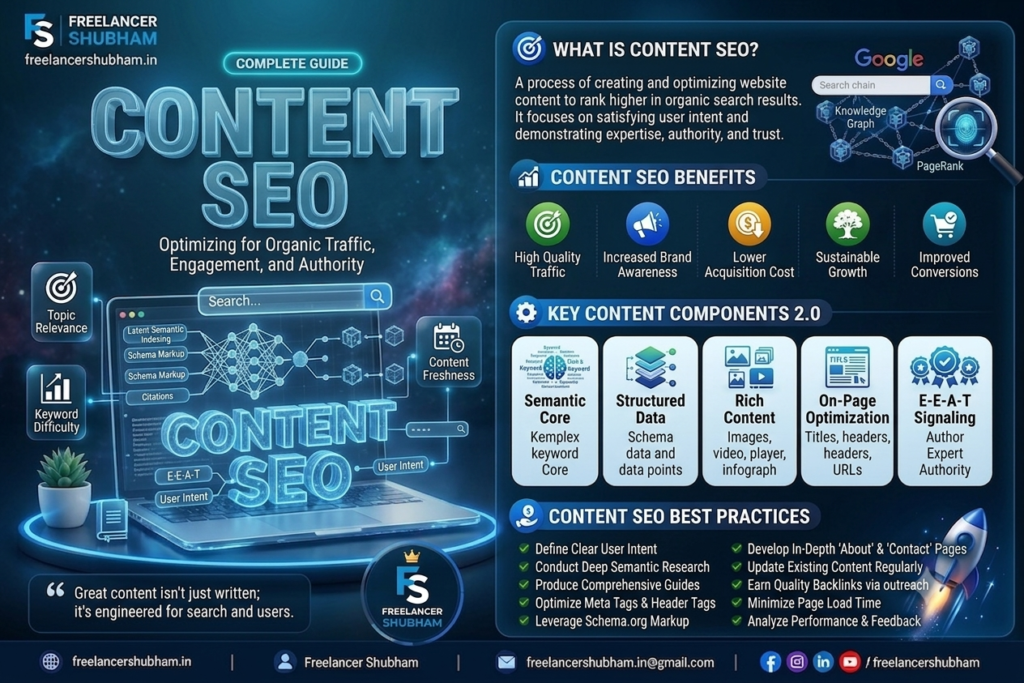
What is Content SEO?
Content SEO is the process of creating, optimizing, and publishing high-quality content that helps a website rank higher in search engine results. It focuses on writing useful, relevant, and keyword-rich content that satisfies user intent while following SEO best practices. Good Content SEO helps search engines understand your content and makes it easier for users to find your website.
10 Detailed Points About Content SEO
1. High-Quality Content
The foundation of Content SEO is creating original, informative, and valuable content that answers users’ questions. High-quality content keeps visitors engaged, builds trust, and increases the chances of ranking higher on search engines.
2. Keyword Research
Keyword research helps you discover the words and phrases your target audience is searching for. Using the right keywords naturally throughout your content improves its visibility and helps attract the right visitors.
3. Search Intent Optimization
Understanding why users are searching is essential. Your content should match their intent, whether they are looking for information, comparing products, or ready to make a purchase. Meeting user intent increases engagement and rankings.
4. SEO-Friendly Titles and Headings
A clear, keyword-rich title and well-structured headings (H1, H2, H3) make content easier to read for both users and search engines. Proper headings improve readability and help search engines understand the page structure.
5. Optimized Meta Title and Meta Description
The meta title and meta description appear in search results and encourage users to click on your page. Writing compelling and keyword-focused meta tags can improve your click-through rate (CTR).
6. Internal and External Linking
Internal links connect related pages on your website, helping users navigate and improving SEO. External links to trusted sources add credibility and provide additional value to readers.
7. Readable and User-Friendly Content
Content should be easy to read with short paragraphs, bullet points, simple language, and clear formatting. Better readability improves user experience and encourages visitors to stay on your website longer.
8. Image Optimization
Images make content more engaging, but they should also be optimized. Use descriptive file names, add alt text, compress images for faster loading, and choose relevant visuals to improve both SEO and accessibility.
9. Regular Content Updates
Updating existing articles with new information, statistics, examples, and keywords keeps content fresh and relevant. Search engines often reward updated content with better rankings.
10. Performance Tracking and Improvement
Content SEO is an ongoing process. Monitor your website’s traffic, keyword rankings, bounce rate, and user behavior using SEO tools. Analyzing performance helps you improve your content strategy over time.